

Our bedroom faces west, and the brick holds the afternoon heat until well after dark. We keep the thermostat at 68. I have been in menopause about three years now, and the 3am wake-up has become its own kind of alarm clock. For a long stretch I assumed the answer was fewer blankets. It was not. Dale runs cold and sleeps under a heavy comforter, and when I stripped my side of the bed down to a single sheet I just traded one problem for another: hot at midnight, cold and shivering by four, awake either way.
What actually helped was learning to layer, not to subtract. The blanket I ended up building the whole setup around is the Elegear cooling blanket in the 79 by 86 inch size. It is a throw, so on a queen bed it covers my half with enough left over to tuck, and it does not start a tug of war with Dale at two in the morning. One side is the Arc-chill 3.0 cooling fabric with jade nano-particles. The other side is a moisture-moving fabric. That two-sided construction is the entire reason the order below matters. Get it backwards and you will be warm and confused by Thursday.
The Layer That Finally Stopped My 3am Wake-Up
Cooling on one side, moisture-moving on the other, 79 by 86 inches, machine washable. It covers my half of a queen bed without a fight over the covers.
Amazon Check Today's Price on Amazon →How I Layer It Now, Step by Step
These five steps are the order I arrived at after about a year of rearranging things in the dark. None of them are expensive and most of them use bedding you already own. The one piece worth buying on purpose is the cooling layer itself, and it only does its job if everything under and over it is set up to let it.
Step 1: Fix the sheet first, because it touches you longest
The sheet is the layer in contact with your skin for more hours than anything else on the bed, and it is the one most people ignore. I went through three sheet changes in a single summer before I landed on plain cotton percale, and the first two were mistakes worth describing. The first was a brushed microfiber set I bought on sale in February because it felt soft against my hand in the store. It was soft. It was also, by one in the morning, roughly the texture of a warm plastic bag. The second was a bamboo blend the package called cooling, which slept better than the microfiber for about a week and then washed into the same non-breathing feel. Percale at 200 to 300 thread count has held up better than either, wrinkles and all. Linen works too if you do not mind the wrinkles.
Two smaller habits come with it. Keep the sheet pulled taut, because a bunched-up sheet under your back traps heat exactly where you do not want it. And change it more often in summer than you think you need to. A sheet that has absorbed a week of night sweats is not a neutral surface anymore, and no blanket on top of it can fix that.
If you are still sleeping hot after a good cotton sheet and a cool room, that is your signal that the problem is the layer above it and not the mattress. Which brings us to the part people get wrong most often.
Step 2: Put the cooling face down, toward your skin
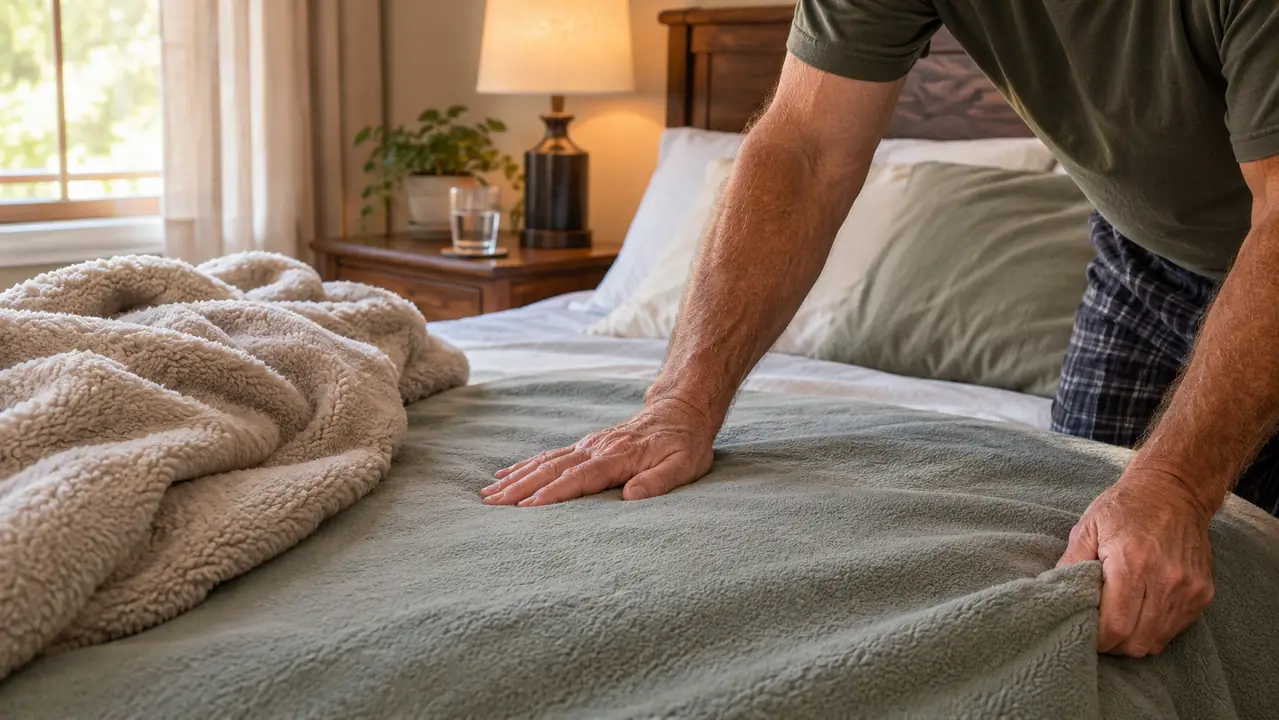
The Elegear blanket is not the same on both sides, and this is the single most common mistake I hear from friends who bought one and were disappointed. The Arc-chill 3.0 side is the side that does the cooling. The rating used for that fabric, Q-Max, is above 0.5, which in plain terms means it pulls heat off your skin faster than ordinary cotton does. The reverse side is built to move moisture along rather than hold it against you. I keep a note on my phone of what I have tried and roughly when, mostly because I forget, and the entry for the first week of July says it plainly: feels nice, does not feel cool. That note is what eventually made me go back and read the tag instead of assuming the blanket was overhyped.
So the cooling side goes down. Down means touching you, or touching the sheet if you prefer a sheet between. It should not face the ceiling, and it should not be the side you see when the bed is made, which is the mistake I made for the first two weeks. I could not work out why the thing felt like an ordinary blanket until I flipped it, and then it felt like something had been switched on.
Once you have it oriented right, the bed looks slightly odd because the pretty side is hidden. Ignore that. You are asleep. Nobody is grading the bedspread at three in the morning, and the side that faces up is doing a real job too, which is carrying moisture away from the side that faces you.
Q-Max above 0.5 sounds like marketing. What it means in practice is that the fabric pulls heat off your skin faster than cotton does, and you feel it in the first ten minutes.
Step 3: Give each sleeper their own top layer
This is the step that improved my sleep more than any product did. One queen bed, two people, two entirely different internal thermostats. Dale gets his heavy comforter over his half. I get the Elegear over mine. We are not sharing a top layer, and we stopped pretending years ago that we could.
The 79 by 86 inch size makes that practical rather than fussy. Centered on my half of the mattress, it leaves me somewhere around eight inches of overhang at the edge, which is enough that it does not slide off when I turn over, and it does not drag his covers with it either. I measured that overhang once with a tape because I was annoyed about waking up uncovered, and eight inches has been the number I check against ever since. On a queen you are essentially using a generously sized throw as a personal layer, which is exactly what it is designed to be.
If you share a smaller bed, the same idea still works. You just fold or overlap differently. The point is boundaries, decided once, in daylight, so that nobody is negotiating over the duvet at three in the morning when nobody is at their best. Two separate top layers is the whole trick.
Step 4: Keep one thin layer at the foot for the 4am drop
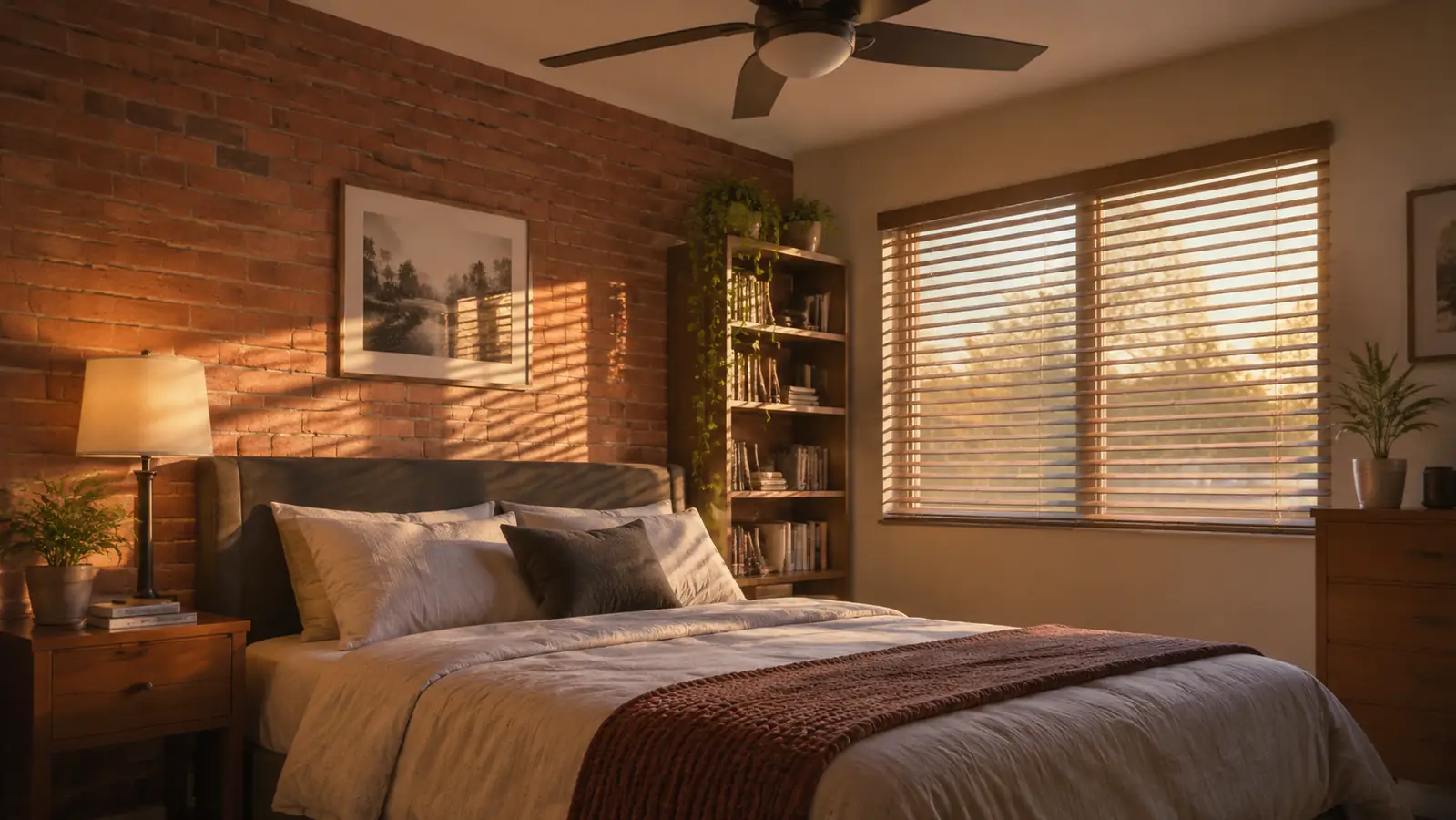
Here is the part nobody warns you about. A cooling blanket does its job well enough that somewhere around four in the morning, once your body has finally cooled down and the house is at its coldest, you can wake up genuinely chilly. That is not the setup failing. That is the setup working, and it needs one more piece.
So I keep a thin cotton throw folded at the foot of the bed. Not a comforter, not anything with fill in it, just a single light layer. I learned this the hard way on a Tuesday in August, the third night in a row above 90, when I woke at 4:10 with cold legs and nothing at the foot of the bed because I had put the throw in the wash that afternoon and never brought it back up. I ended up walking to the hall closet in the dark, and I was awake for good by the time I got back. Now the throw goes back on the bed before I go to bed, always.
The requirement is that this layer has to be easy to reach and easy to kick off again by six, when the heat comes back. Anything you have to get out of bed to find defeats the purpose entirely. Folded at the foot means your hand finds it without your eyes having to open.
Step 5: Wash it properly, or the cooling fades
A cooling blanket is a piece of fabric with a finish and a weave doing specific work, and heat is what breaks that down over time. The care instructions on this one are specific: machine washable, air dry recommended, and if you do tumble dry, the lowest heat setting. The tag gives 86 degrees for washing and 120 as the ceiling in the dryer.
In practice I wash mine on a cool cycle, on its own or with the sheets, and I hang it over the shower rod or out on the line. The first time I washed it I stood there for a minute expecting it to come out stiff or different, and it came out the same. If I am in a hurry I run the dryer on the lowest setting for a short stretch and then hang it the rest of the way. I have not had a problem in the time I have owned it, but I also have not pushed my luck with it.
Worth mentioning: it is OEKO-TEX Standard 100 certified, which means it has been tested for harmful substances. That mattered to me more than I expected, because this is a thing I hold against my face for eight hours a night. It is also light enough at 1335 grams that washing it does not feel like an event.
What Else Helps
The blanket is the center of the setup, but it is not the whole room. A fan moving air across the bed does more than most people give it credit for, and it costs almost nothing to run overnight. We use a standing fan aimed slightly up and away, which pushes air around without blasting me directly in the face. I worked out that angle over about a month of moving the thing two inches at a time. I also keep a glass of water on the nightstand now, because waking at three already dehydrated makes everything about the next hour worse.
Timing the thermostat helps too. Ours sits at 68 all night, but I have friends who drop theirs a degree or two from ten until two, when the hot spell tends to hit, and let it come back up after that. And the boring one that nobody wants to hear: keep a change of nightclothes within reach. Getting up to hunt for a dry shirt in the dark is how a five minute wake-up turns into an hour of being awake for good.
One last thing, and I say it every time I write about this. None of this is treatment. A cooling blanket and a better layered bed make a hot night more bearable, and that is the whole of what they do. If night sweats are wrecking your sleep most nights, or they arrived suddenly, or they come with symptoms that are new to you, that is a conversation with your doctor and not a shopping decision. Mine knows exactly what I am doing, and I follow her advice on anything medical.
Build the Layer Once and Stop Rearranging at 3am
Elegear's cooling blanket: cooling on one side, moisture-moving on the other, 79 by 86 inches, machine washable and OEKO-TEX Standard 100 certified. The rest of the layering you probably already own.
Amazon Check Today's Price on Amazon →