
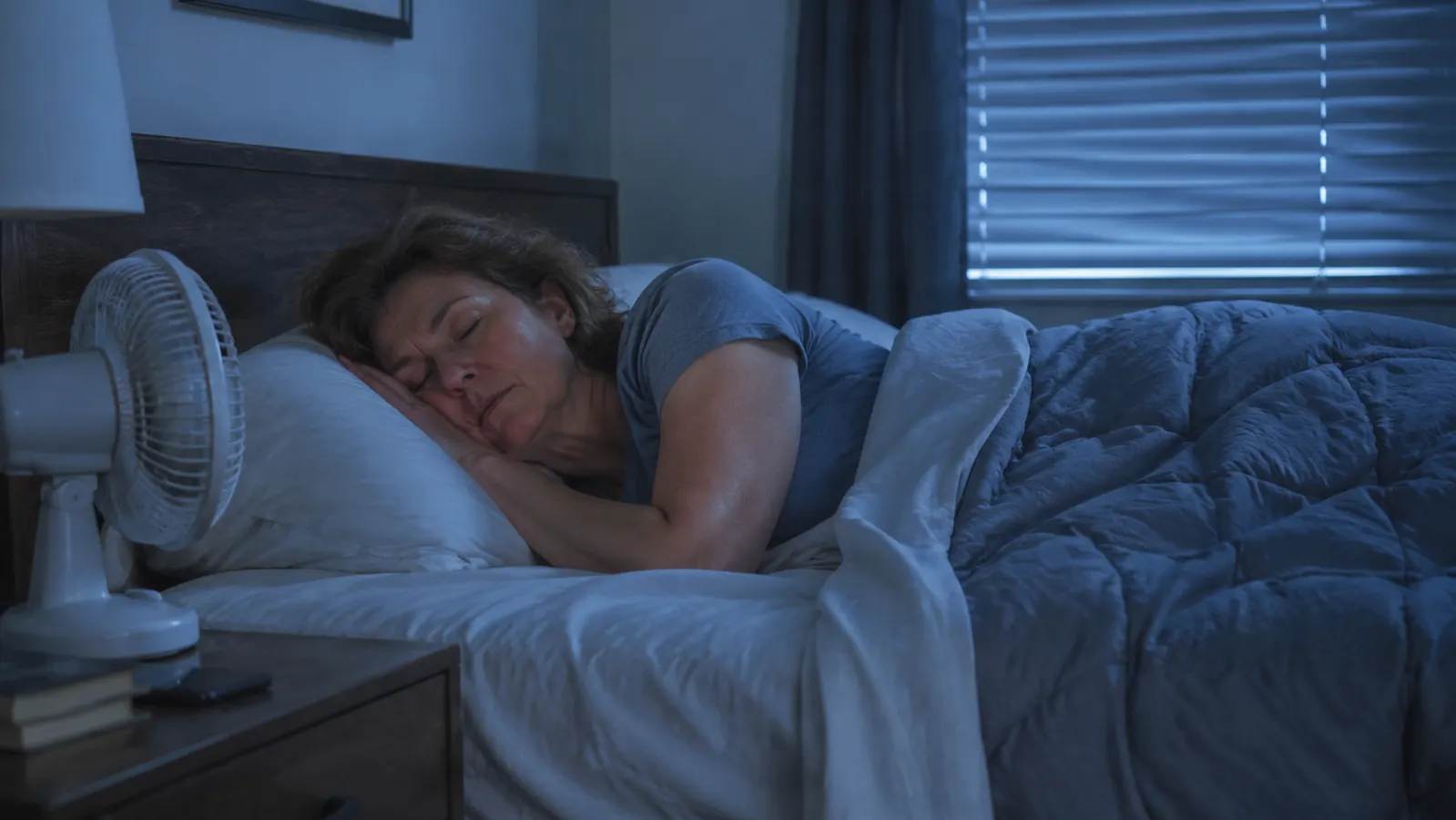
It is 3:12 in the morning and I am flipping my pillow again. Not the cool side. The other cool side, the one I already used an hour ago. I am 54, I have been in menopause about three years, and the 3am wake-up with a hot head and a damp pillowcase has become the most reliable part of my week. If you are reading this, you probably know the routine. You wake up hot, you turn the pillow over, you get maybe twenty minutes, then you are awake for good. I tried a lot of things before I tried changing the pillow itself, and most of them helped for exactly one night. What finally moved the needle was a QUTOOL cooling pillow, set up correctly. That last part matters more than the pillow, which is why this is a walkthrough of what I actually do rather than a list of things to buy.
A cooling pillow is not a treatment for hot flashes and it will not fix hormones. I want to be plain about that, because I am not a doctor and I am not going to pretend to be one. Talk to your doctor about the medical side, hormones, medication, whatever applies to you. What a cooling pillow can do is remove one source of heat from a night that already has too many. Your head rests on that surface for seven or eight hours. If the surface holds heat, you have built a small heater into your bed. If it does not, you have one less thing working against you. That is the whole idea, and it is worth getting right.
The Pillow That Ended the 3am Flip
QUTOOL puts the cooling in the pillow, not just the case. One face is a silky ice fabric that starts about 4 to 9 degrees Fahrenheit cooler on the surface, the other face is soft. Shredded memory foam fill comes out by the handful, so you can set the loft where your neck actually wants it.
Amazon Check Today's Price on Amazon →Five Steps That Actually Made a Difference
Step 1: Start With the Pillow, Not the Pillowcase
My first mistake was buying pillowcases. I bought two of the ones marketed as cooling, and they were cool to the touch in the package and warm by one in the morning. That is not a knock on those pillowcases so much as a misunderstanding on my part. A thin layer of fabric can feel cool when you first lie down, but there is almost nothing behind it to hold that feeling. The surface you rest on all night is the pillow. If the pillow underneath is holding your body heat, the nicer case on top of it is just a better blanket for the heat.
QUTOOL builds the cooling into the pillow itself. The cover is double-sided. One face is a silky ice fabric, and QUTOOL states it lowers the surface temperature by roughly 4 to 9 degrees Fahrenheit. The other face is a softer fabric, so you are not stuck with one feel year round. I sleep on the ice side from May through September and turn it over in the colder months, which sounds fussy and is really just practical. The cover is a 350 thread count polyester, and the fill is 85 percent cross-cut memory foam with 15 percent soft microfiber, so it gives under your head instead of bouncing back at you.
For the record, the first pillowcase cost me nineteen dollars and the second one cost more than that, and both of them spent the following August folded in the bottom of the linen closet. I keep them there because they are perfectly good pillowcases and because every so often I think about trying one again on top of the QUTOOL, and then I remember that stacking fabric on a cooling surface is exactly the mistake I am warning you about. Do not do what I did. Put the money on the pillow.
Here is the honest part, and I would rather say it than have you find out at 2am. No pillow stays cold all night in a warm room. The listing says it plainly, that all bedding fabrics are affected by the temperature around them. So this is not a refrigerator. What it does is start cooler and take much longer to warm up than a standard pillow, and that gap is the difference between falling back asleep at 3:15 and lying there staring at the ceiling until 4:30.
Step 2: Break the Heat Trap Between You and the Pillow
The second thing I had to fix was everything sitting between my head and the room. Damp hair is the big one. I shower at night, and for years I went to bed with hair still wet at the roots, then wondered why my pillow was warm by midnight. Now I dry it, or I shower earlier in the evening. It is a small change and it did more than the first two cooling pillowcases I bought. I moved my shower to seven in the evening rather than nine, which gives my hair two hours to dry without a blow dryer, and that alone cut the middle-of-the-night dampness noticeably.
The other heat traps are easier to miss. A folded blanket tucked behind your head. A second decorative pillow stacked on top of the one you actually sleep on. A heating pad left switched on at the bottom of the mattress on your side. A phone charging under the pillow, which I did for years without thinking about it. Each one is a layer holding warmth against the cooling surface. Clear them off. If you like weight on you, keep the heavy layer low, across your legs, and leave your head and neck open to the air. I took a folded quilt off the head of the bed in June and did not put it back until October.
Step 3: Set Up Your Side of the Bed
Our bedroom faces west, which in a Tennessee July means the room is still giving off heat at nine at night. We keep the thermostat at 68, and I close the blinds by two in the afternoon. That last part made more difference than I expected. A room that has baked all afternoon takes hours to recover, and your pillow is sitting in that heat whether it is a cooling pillow or not.
The blinds are nothing special, just the wide slatted kind that came with the house, and pulling them shut is a ten second job I used to put off until the sun was already low. On the worst afternoons, the west wall of that room is warm to the back of your hand at six in the evening. By nine it is merely neutral. That is a three hour difference in how the room feels when I climb in, and it costs nothing but remembering to do it.
There is also the Dale problem. He runs cold, sleeps under a heavy comforter, and I sleep under a sheet and nothing else. For years we negotiated. Now I do not negotiate. His comforter stays on his half, my side stays bare, and a small fan on my nightstand moves air across my head and shoulders. The QUTOOL pillow sits on my side of the bed and stays there. A queen bed is plenty of room for two different climates if you stop trying to share one.
Step 4: Set the Loft Before You Judge It
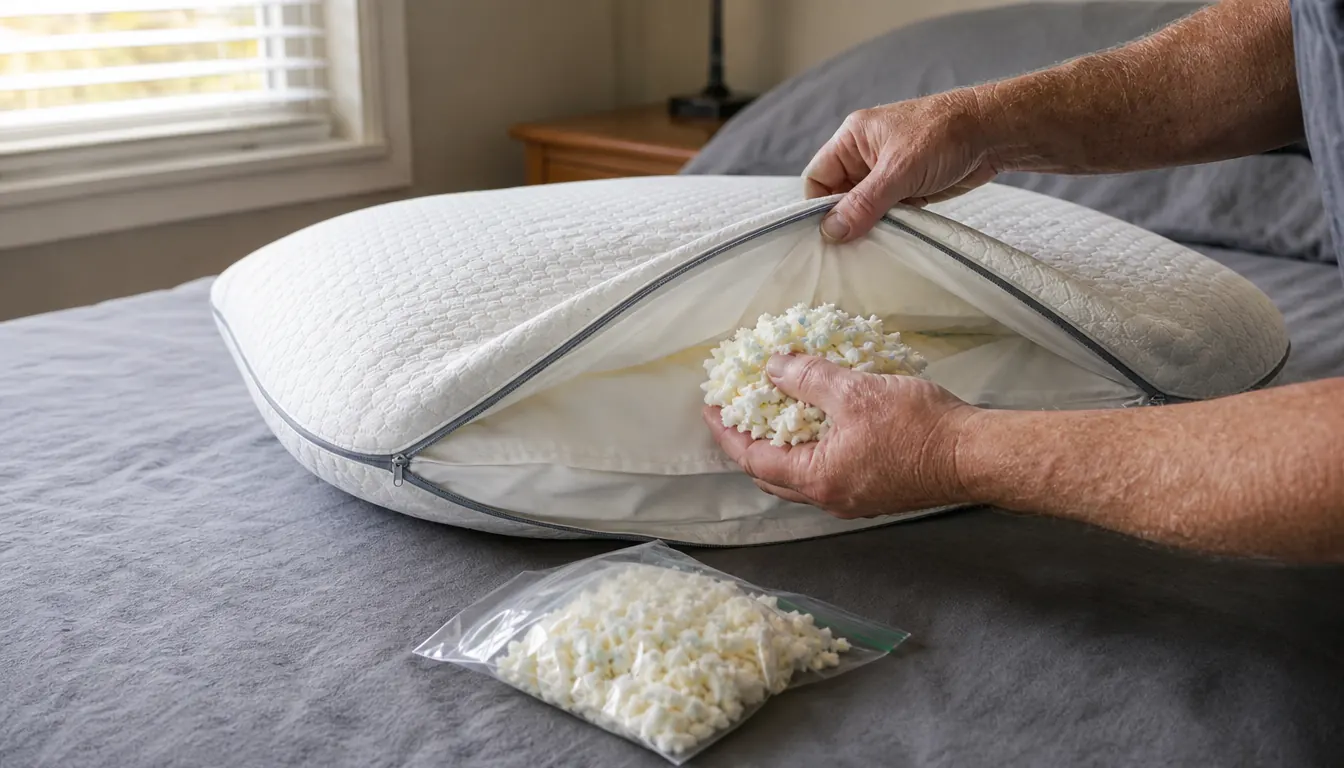
This is the step people skip, and it is the reason a few folks leave a sour review. The QUTOOL pillow is filled with shredded memory foam, not a solid block, so you can open the inner cover and take fill out by the handful. Leave too much in and it feels like a brick under your neck. Take too much out and there is no support at all. Side sleepers need more loft under the neck, back sleepers need less, stomach sleepers need very little.
My advice is to remove two large handfuls, sleep on it three nights, then decide. Put the extra fill in a zip bag and keep it, because foam settles over time. I took out about a third of mine and then added a little back three weeks later. Give it a week before you form an opinion. One bad first night is not a verdict, and one great first night is not proof either.
I sleep on my side, mostly my right, and the first night I did nothing at all, which was a mistake. The pillow arrived plump and I lay down on it and my ear was level with my shoulder and my neck was cranked sideways. I woke up with a stiff jaw. The second night I took out three handfuls, put them in a gallon bag, and slept much better. Three weeks on, I put one handful back. If you are a back sleeper, start by taking out four.
Step 5: Take Care of It So It Stays Cool
The care instructions matter more here than with an ordinary pillow, because the fill cannot go in a machine. You wash the cover only, on a machine cycle, and you air dry it with no heat. The shredded memory foam itself never gets washed. If it takes on damp, it needs air, not a dryer. When the pillow first arrives, let it air out for a day or two before you sleep on it. It ships compressed and it needs that time to expand and to lose the packaging smell.
I wash my cover every two weeks, which is more often than I used to wash a pillowcase, because the cover is the part that touches my face all night. A second cover in rotation would make that easier and I keep meaning to order one. It is a small chore, and it is the difference between a cooling surface that works and one that has absorbed three weeks of night sweat.
The first time I washed mine I laid the cover flat over the back of a kitchen chair on the porch and it was dry in about three hours in the July sun. The second time I got impatient and put it in the dryer on low, and I could feel the difference afterward, slightly shrunken at one corner and less silky on the ice side. No heat means no heat. A chair and an afternoon will do it.
One more note on handling. The pillow weighs 3.3 pounds, light enough that you can fluff it and turn it in the dark without waking yourself up properly. That sounds like nothing. When you are flipping a pillow four times a night, it is not nothing.
What Else Helps
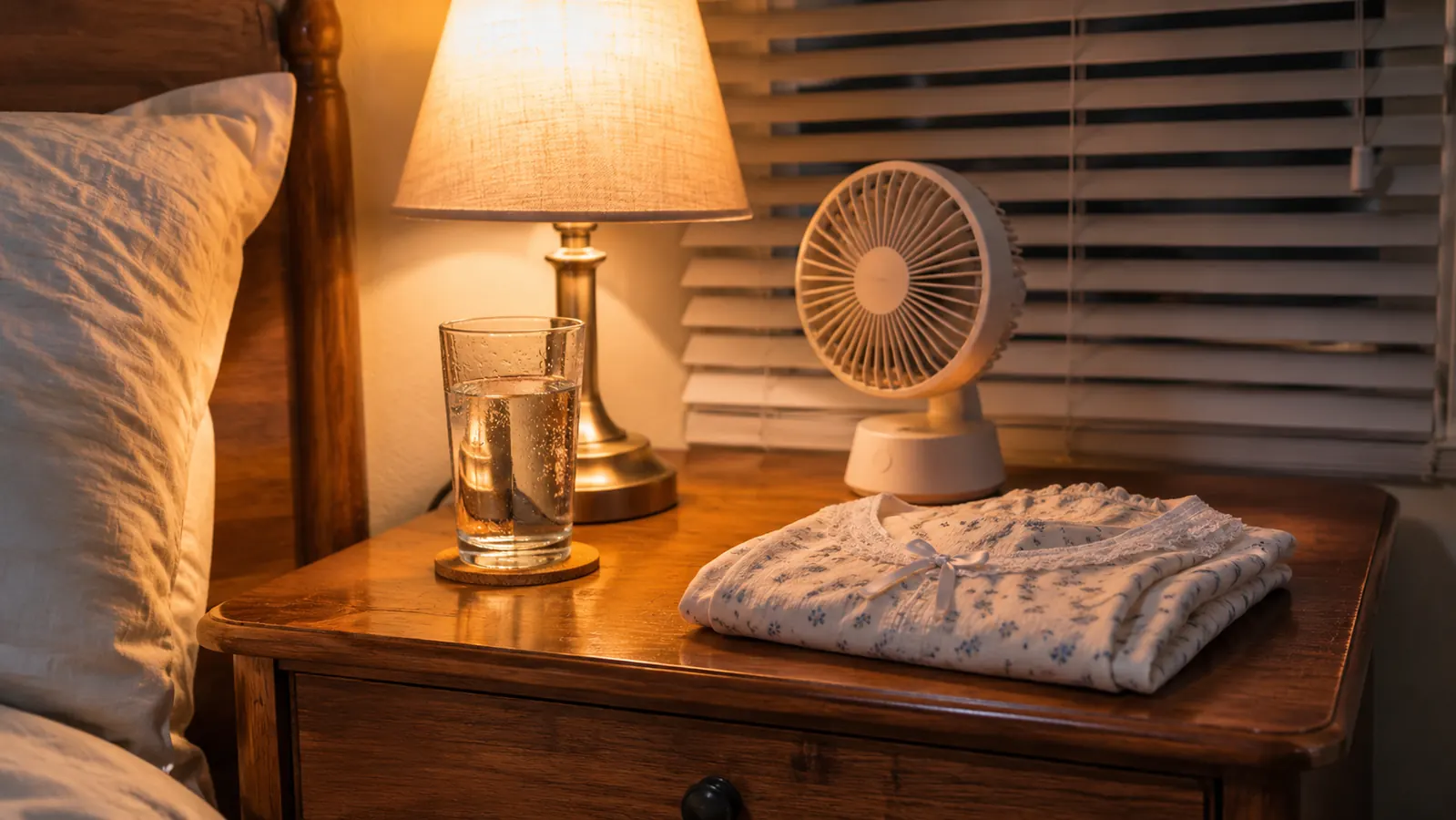
The pillow is one piece of a night. The rest is a set of small habits, none of them dramatic. Cool water within reach so you are not padding to the kitchen at 3am and waking up properly on the way. A cotton or bamboo nightgown instead of the polyester set I wore for years without thinking. A fan that moves air across the bed rather than at the wall. A lukewarm shower before bed instead of a hot one. Leaving the bedroom door open so the cooler hall air mixes in. None of these are clever. They add up.
And I will say the thing I always say. None of this treats menopause. It treats your bedroom. If you are waking five or six times a night, or soaking through a nightgown, that is worth a conversation with your doctor, and I mean that plainly and without a lecture attached. For the ordinary case, the hot head at 3am and the damp pillowcase, a pillow that holds less heat plus a cooler room plus one less blanket is often enough to get you from awake back to asleep.
Your head rests on that surface for seven or eight hours. If the surface holds heat, you have built a small heater into your bed.
I have replaced a lot of things in the last three years and most of them were a waste of money and hope. The QUTOOL pillow is one of the few that stayed on the bed. It is not cold all night. It is cooler at the start and slower to warm, and on a bad night that is enough to get me from lying awake to asleep again. If you try one thing from this list, make it the pillow, and then set it up the way I described. The setup is half the result, and the setup is free.
Start With the Pillow, Then Set It Up Right
Shredded memory foam you can adjust by the handful, a cooling ice-silky face that starts about 4 to 9 degrees Fahrenheit cooler, and a soft face for the cooler months. CertiPUR-US foam, 3.3 pounds, standard size, cover washes and air dries with no heat.
Amazon Check Today's Price on Amazon →