

Three in the morning has a sound in our house. First the thermostat clicks off. Then Dale rolls over and pulls the comforter up to his chin. Then I lie there, wide awake, too warm to do anything useful, listening to a ceiling fan that has been on high since ten. I am 54. I have had nights like this for about three years, since the night sweats started. My doctor knows the whole story and I follow her advice on anything medical. But there is a second half to this that nobody hands you a prescription for, and it is the bed.
A hot night is not one problem. It is four or five small problems stacked on top of each other: the room, the mattress, the thing over you, the person beside you, and whatever you do at three in the morning when your eyes open and your skin is damp. The sheets on our bed are CGK Unlimited, and they are a real piece of this. They are not the whole answer. Anyone who tells you a set of sheets fixes menopause is selling you something. But the layer closest to your skin is where I would start, and the rest of this is the order I would tackle everything else in.
Start with the layer closest to your skin
The CGK Unlimited queen set is what is on our bed: flat sheet, fitted sheet, two pillowcases, deep pockets that hold the corners, machine wash. It is the cheapest fix on this list and the one I noticed first.
Amazon Check Today's Price on Amazon →Step 1: Cool the room before you cool the bed
Our bedroom faces west, which sounds like a small detail until you live with it. The afternoon sun sits on that wall for hours and the brick holds it like a brick oven. At nine at night that wall is still warm to the back of your hand. For two years I kept turning the thermostat down and wondering why it did not help, and the reason is that I was cooling air in a room that was radiating heat back at me the entire time.
What worked was starting earlier. I close the curtains on that west window by two in the afternoon in summer, well before the sun comes around. We run the thermostat at 68 at night and I have stopped treating that number as adjustable, because Dale will nudge it to 71 if I let him. A fan moving air across the bed helps more than another degree on the thermostat does, and it is cheaper to run all night. The point is to have the room cool before you get into it. Cooling a bedroom while you are already in the bed and already overheated is a much slower project.
One caution, because I got this wrong for a long time. A very cold room plus a heavy comforter does not cancel out. It just moves the problem, and you end up with a hot body under a thick layer and cold ears. The room should be cool and the bedding should be light. If you fix the room and leave the comforter where it is, you will still wake up at three.
Step 2: Get the heat out from under you
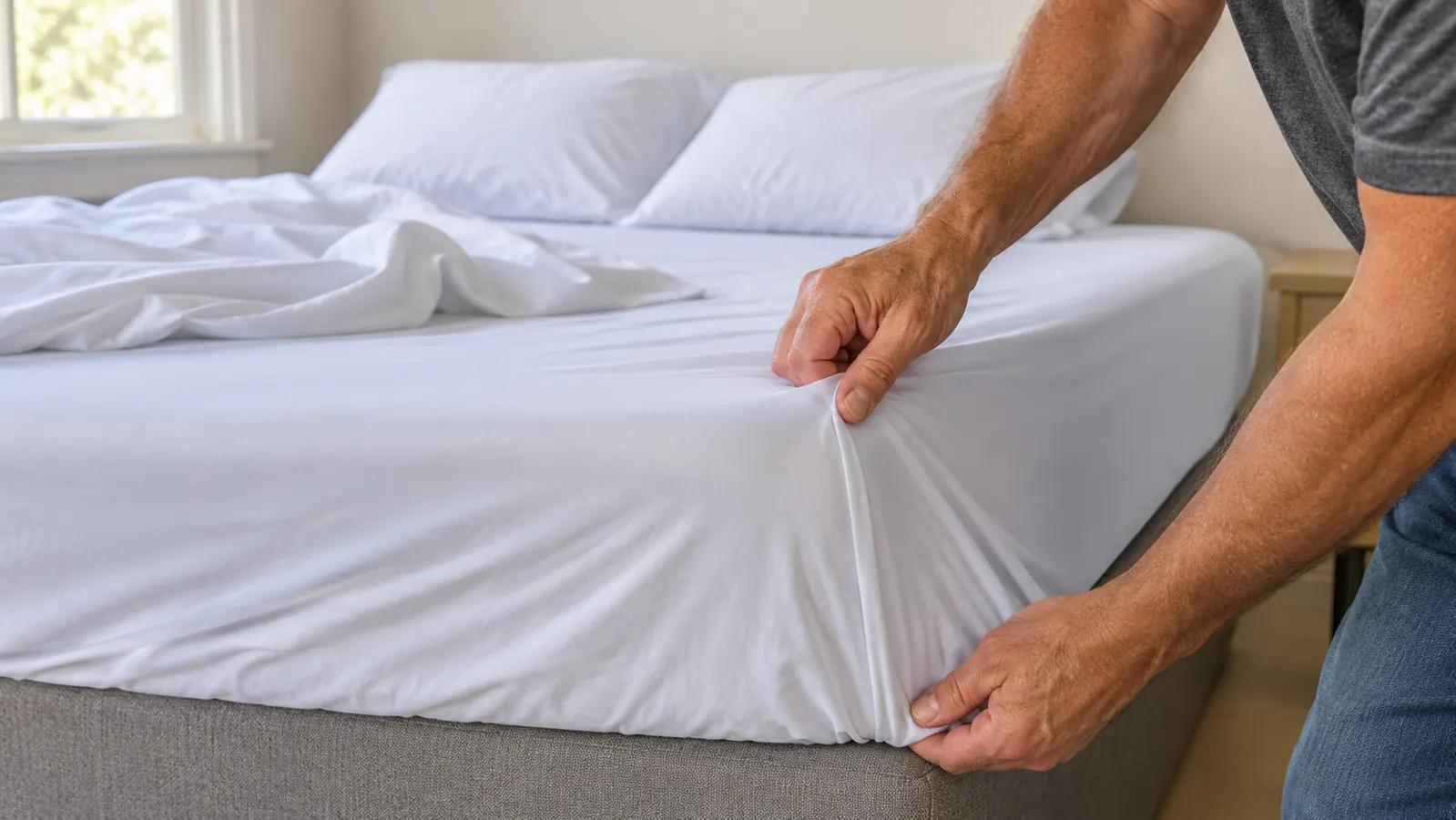
Everybody talks about what is on top of the bed. Almost nobody talks about the two layers underneath you, and that is where I lost the most time. A fitted sheet is thin. Whatever it is stretched over is what you are actually lying on.
We had a memory foam topper for years, and memory foam is very good at doing what it advertises: it holds the shape of your body. It also holds the warmth of your body, and by two in the morning that topper was a warm imprint of me. I am not going to tell you to throw out a topper you like. I will tell you to notice it. If your back feels warm and slightly damp when you wake up, the mattress under the sheet is part of the story, and no sheet on the market can fix that from above.
The other thing that matters down here is fit. A fitted sheet that is too small pops off the corners by morning, and a bunched sheet makes a hot lump under your hip that you will feel at three. This CGK Unlimited set fits mattresses up to around 16 inches deep, and the pockets are cut deep enough that the corners stay down where you put them. Our mattress is well under 16 inches, so it fits with room to spare. That sounds like a boring detail to care about. It is the detail I care about most, because a flat sheet is a cool sheet.
Step 3: Change what touches your skin
This is where the sheets themselves come in, and I want to be straight with you about what they do and what they do not do.
The CGK Unlimited set is 100 percent polyester microfiber with a 200 thread count, and it feels smooth, almost slick, the way microfiber does. It is not cold to the touch, and I would not believe anyone who tells you a sheet feels refrigerated. What it does is stay light, and it does not trap heat the way a brushed or flannel surface does. Because it is wrinkle resistant it stays flat instead of folding itself into warm creases under you in the night. I wash ours on a normal cycle and dry them on low, and they have come through a year of that without complaint.
Here is the honest part, and you should weigh it before you buy. Some women find microfiber warmer than cotton, because polyester does not breathe the way a plain cotton weave does. I did not, but I am one person. I found these cooler than the heavy cotton set they replaced, mostly because that set was heavier, not because the fiber does anything special. If you already know that polyester makes you feel clammy, these are probably not your sheets, and I would rather say so now than have you find out in July.
What comes in the bag is a flat sheet, a fitted sheet, and two pillowcases at 20 by 30 inches, which fits a standard queen pillow. Four pieces, nothing else. Wash them once before the first night, because they arrive folded and a little stiff, and then give them a few nights before you decide. The first night I noticed they were smooth. By the third night I noticed I had not woken up at two.
A flat sheet is a cool sheet. Bunched fabric under your hip is a hot spot, and no thread count on the label fixes that.
Step 4: Dress the bed for two people
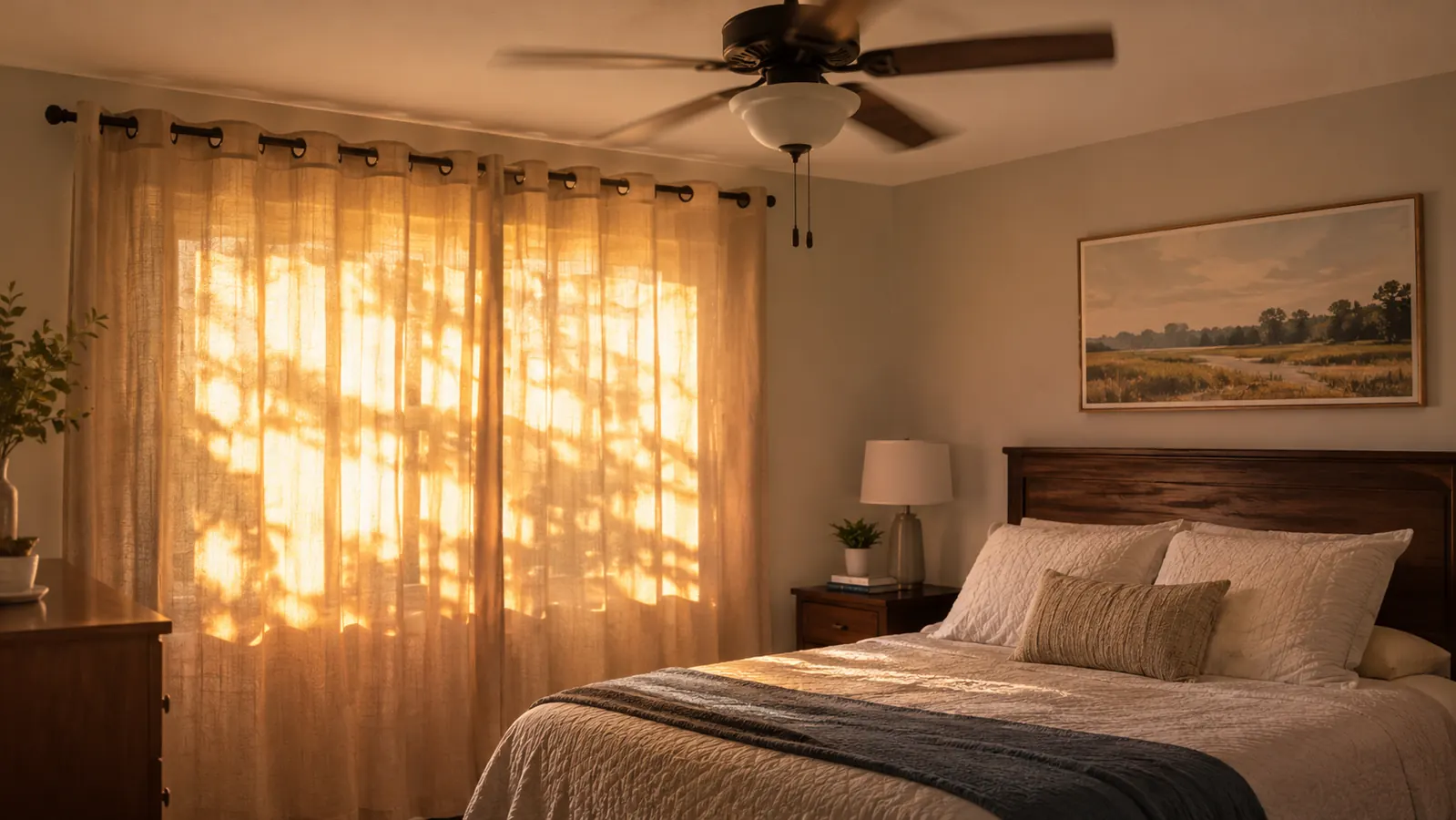
Dale runs cold. He has always run cold. He would sleep under a down comforter in July if I let him, and for years I did let him, which meant I spent every night either too hot under his comforter or too cold with nothing at all. That is a silly way to live and it took me far too long to stop doing it.
What we do now is split the bed. The sheets are shared, one set stretched across the whole queen, and then he has his comforter on his half and I have a light cotton blanket on mine. If you share a bed with someone whose thermostat does not match yours, this is the single cheapest change on this list and it costs nothing at all. Fold the heavy thing in half. Put it on his side. Nobody has to argue about it at bedtime.
This is also why I went back to a fitted sheet that stays on. When two people are pulling different bedding around all night, a sheet that comes off one corner gets dragged toward the middle of the bed, and then you are lying on a wrinkle for the rest of the night. Deep pockets and a snug fit are not a luxury. They are what keeps the split arrangement from falling apart by two in the morning.
Step 5: Have a plan for three in the morning
You are going to wake up sometimes. Even with a cool room, a light blanket, and the right sheets, some nights will still find you awake at three, warm and annoyed. What matters then is what you do in the first ten minutes, because that is what decides whether you lose an hour or lose the rest of the night.
My rule is that I do not lie there and stew in it. If I am hot, I get up. I go to the kitchen and drink a glass of cool water, and I run cool water over my wrists for a minute, which sounds like an old wives' tale and works better than it has any right to. I take the flat sheet off the bed and fold it at the foot, so the layer over me is thinner when I come back. Then I get back in within about fifteen minutes, because if I stay up longer than that my brain decides it is morning and the night is finished.
The other thing I keep is a spare. There is a folded flat sheet and a dry pillowcase in the bottom of the closet, and if I wake up properly damp I change the pillowcase in the dark and get back in. It takes two minutes. It means I am not lying on a damp pillow arguing with myself about whether it is worth getting up, and the answer is always yes, it is.
What Else Helps
A handful of smaller things added up for me. I switched to a thin cotton nightgown, because a t-shirt with a waistband was trapping heat around my middle. I keep a glass of water on the nightstand and I actually drink it, which sounds obvious and which I skipped for the whole first year. I stopped eating a real dinner after seven, which helped more than I expected and which I resent a little. Blackout curtains on that west window earn their keep twice over, cutting the afternoon heat and keeping the five in the morning summer light out of the room.
I would also put a fan where it reaches the bed and not just on the ceiling. A ceiling fan moves air around the room. A small fan pointed at your side of the bed cools you, specifically, which is the part that matters when the person next to you has the comforter folded over himself like a burrito. It is not elegant. It is the difference between waking up at three and sleeping until six.
And I will say the thing I say in every one of these pieces, because it is true. Sheets are a comfort tool. They are not a treatment. If you are waking up drenched several nights a week, that is a conversation with your doctor and not a shopping problem, and there are real options for menopause symptoms that no bedding set can touch. My doctor has been the most useful person in this whole three year stretch. I would not have gotten this far without her.
The layer you can change tonight
Queen set, four pieces, deep pockets that hold the corners through a night of tossing, machine wash, no special care required. Start with the thing closest to your skin and work outward from there.
Amazon Check Today's Price on Amazon →