
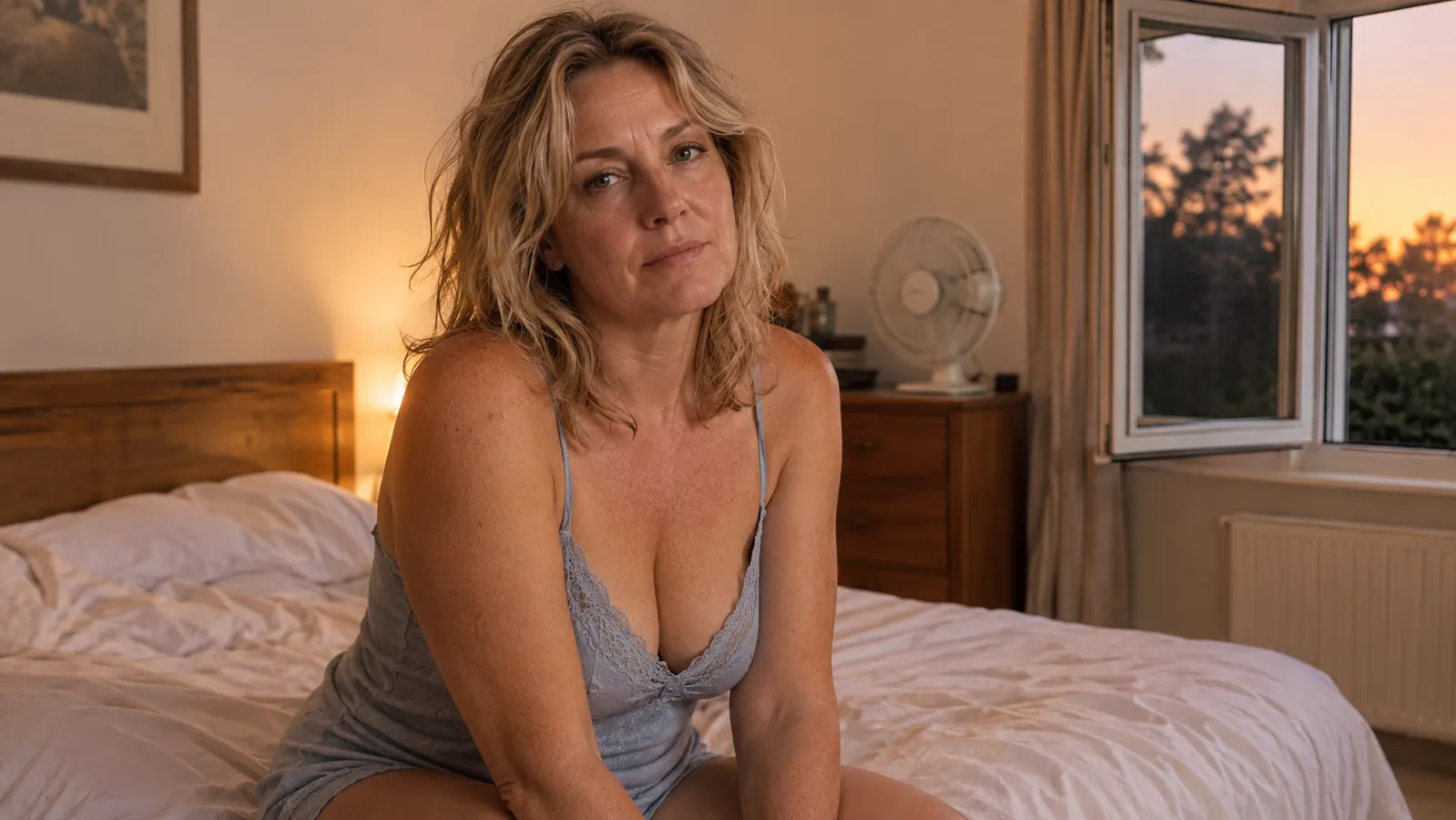
Hot nights have a rhythm to them. You fall asleep fine at eleven, then somewhere around two or three you wake with your back damp and the sheet stuck to your legs, and getting cool and getting back to sleep eats the hour you had left. By morning you have slept in three pieces and you are making coffee like a woman who has spent the night arguing with a thermostat. I know that rhythm well enough to set a clock by it.
I am Gail Tremont. I am 54, a retired elementary school librarian in Knoxville, Tennessee, and I have been in menopause for about three years. I share a queen bed with my husband Dale, who runs cold and likes a heavy comforter. Our bedroom faces west and holds the afternoon heat, and we keep the thermostat at 68. So when I say I have thought about sleepwear more than a reasonable person should, I mean it. The set I keep reaching for is the Joyaria women's cooling bamboo viscose pajama set, long sleeve with a button front, and the reason is not that it does anything magic. It is that it gets the basics right, and the basics are what wake you up at three.
The set I stopped rotating through: Joyaria's button-front bamboo pajamas
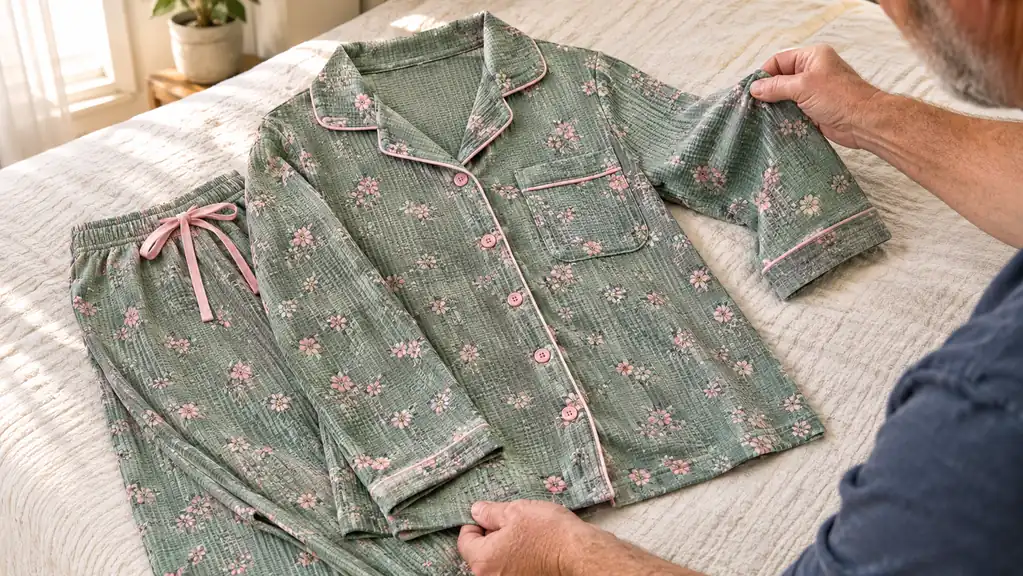
Long sleeve, button front, ankle-length pants, in a bamboo viscose that does not turn clammy against your back. This is the one I reach for on nights I can already tell are going to be rough.
Amazon Check Today's Price on Amazon →Step 1: Start With the Fabric, Not the Cut
Most sleepwear is sold on the cut. A print, a piped collar, a matching set folded neatly in a photo. The fabric is the part that decides whether you actually sleep, and it is the part the tag tells you the least about. When I finally started paying attention, I stopped shopping by how a set looked on the hanger and started shopping by what it was made of and how it hung. That one change did more for my nights than anything else I bought.
Bamboo viscose is a fiber spun from bamboo pulp, and the first thing you notice is the hand feel. It is smooth and slightly cool against the skin, and it drapes instead of sitting stiffly the way a lot of new cotton does. That first-touch coolness is what most cooling marketing is really describing, and it is real, but it lasts about ninety seconds. What matters for the rest of the night is what the fabric does once you start to sweat, and that comes down to whether it hangs away from your back or plasters against it.
This is where the Joyaria set earned its spot in my drawer. The fabric is light and it stays a little away from the skin rather than clinging, so when I wake up damp at three in the morning, I am damp in something that is still moving air instead of in a wet patch I have to peel myself off of. I wore cotton for years and I could always find the exact spot on the sheet where my back had been. I do not find that spot with these.
Step 2: Match the Sleeve and Leg Length to How You Actually Sleep
The instinct on a hot night is to wear as little as possible. I did that for a whole summer: a tank top and shorts, nothing else. What I learned is that bare skin has its own problem. You sweat, the sweat dries, and then you are cold and awake at four in the morning with your arms pulled up under you like a bird. Being uncovered is not the same as being comfortable.
The Joyaria set is long sleeve with ankle-length pants, which sounds like the wrong answer until you have lived through a few of these nights. The sleeves are thin and they hang loose, so they keep the sheet off your arms without trapping heat against them. The pants go to the ankle, and I usually push them to the knee when I first get in bed, then pull them back down around four once the room has lost its warmth. The button front means I can open the top at three in the morning without getting out of bed to change.
Think about your own pattern before you buy anything. If you wake hot, throw everything off, and then wake cold an hour later, you want coverage you can adjust: sleeves you can push up, pants you can pull to the knee, a front that opens and closes. If you wake up drenched and have to change the sheets, that is a different problem, and it is worth raising with your doctor rather than trying to solve it with pajamas.
Step 3: Get the Fit Right at the Shoulders and the Waist
A cooling fabric that fits too tightly is just a hot fabric with better marketing. Anything snug across your ribs or your waist becomes a warm band by midnight, and you will spend the rest of the night tugging at it instead of sleeping. Fit is not a vanity issue at this stage of life. It is the difference between a garment that disappears and one you are aware of all night long.
Joyaria lists the fit as regular and the pants as mid rise, and that combination is what I want. Enough room through the body that the fabric moves with me instead of gripping, and a waistband that sits at my natural waist rather than up under my ribs. A high waist sounds cozy right up until it has crept toward your bra line by two in the morning. Mid rise stays where you put it, which matters more than it sounds like it would.
The shoulders are the other place to look, and they are the place people forget. If a seam cuts into your arm or the sleeve pulls when you roll over, you will feel it every single time you turn. Sizing is the fix here more often than the garment is. Check the size chart, and if you are between sizes and you sleep hot, take the larger one. A little extra room costs you nothing in a pajama set and buys you a great deal in the small hours.
The first night I wore the Joyaria set I slept until 5:40. Not 3:10. That had not happened in months.
Step 4: Check the Closures and the Details That Wake You Up
Buttons are not a small detail on a hot night. They are the difference between a set you can adjust where you lie and a set you have to take off. With a button front I can open the top, cool down for twenty minutes, and button it back up once the room has lost its heat, all without standing up. That sounds minor. At three in the morning it is the whole ballgame.
The collared neck on the Joyaria set is the part I expected to dislike. A collar sounded like something that would bother me at the throat. It does the opposite. It holds the fabric slightly away from my neck instead of letting it wad up under my chin, and when the front is open, the collar keeps the top from sliding off my shoulder entirely. I have slept with mine wide open on the worst nights and the collar is what kept it where it belonged.
The last thing to check is what is actually against your skin when you lie down. Seams that sit flat, a label that does not scratch the back of your neck, nothing twisted underneath you. That sounds trivial until you are lying awake at three being irritated by a tag, and then it is the only thing in the world. Details you never notice during the day become enormous at night.
Step 5: Test One Set Before You Rebuild the Whole Drawer
Buy one set. Not three. Wear it three nights running, including one night you can already tell is going to be rough, because the nights that test pajamas are not the good ones. Any fabric can handle a cool, easy night in October. You are buying this for the night in July when the bedroom is still eighty degrees at bedtime.
Then wash it the way you wash everything else in your drawer and see how it comes out. Fabric that only behaves on the first wearing is not a solution, it is a sample. I have had sets that were lovely in the package and a different garment after two washes: stretched at the knee, pilled under the arm, gone thin at the seat. I have had this one for months now and it still hangs the way it did in the first week.
If it works, buy the second set. Two is the practical number, one on you and one in the wash, which means you are not doing laundry at ten at night so that you have something to sleep in. If it does not work, you have spent one set's worth of money finding out instead of rebuilding your whole drawer on a guess. That is the cheapest way to shop for this, and almost nobody does it.
What Else Helps
Pajamas are one layer of a problem that has several. The one that mattered most in my house was bedding. Dale sleeps under a heavy comforter and I was trying to sleep under it too, on the theory that we shared a bed so we should share covers. We are not sharing covers anymore. He has his comforter, I have a light cotton blanket, and both of us sleep better for it. It solved more of my night than a new pair of pajamas did, and it cost nothing.
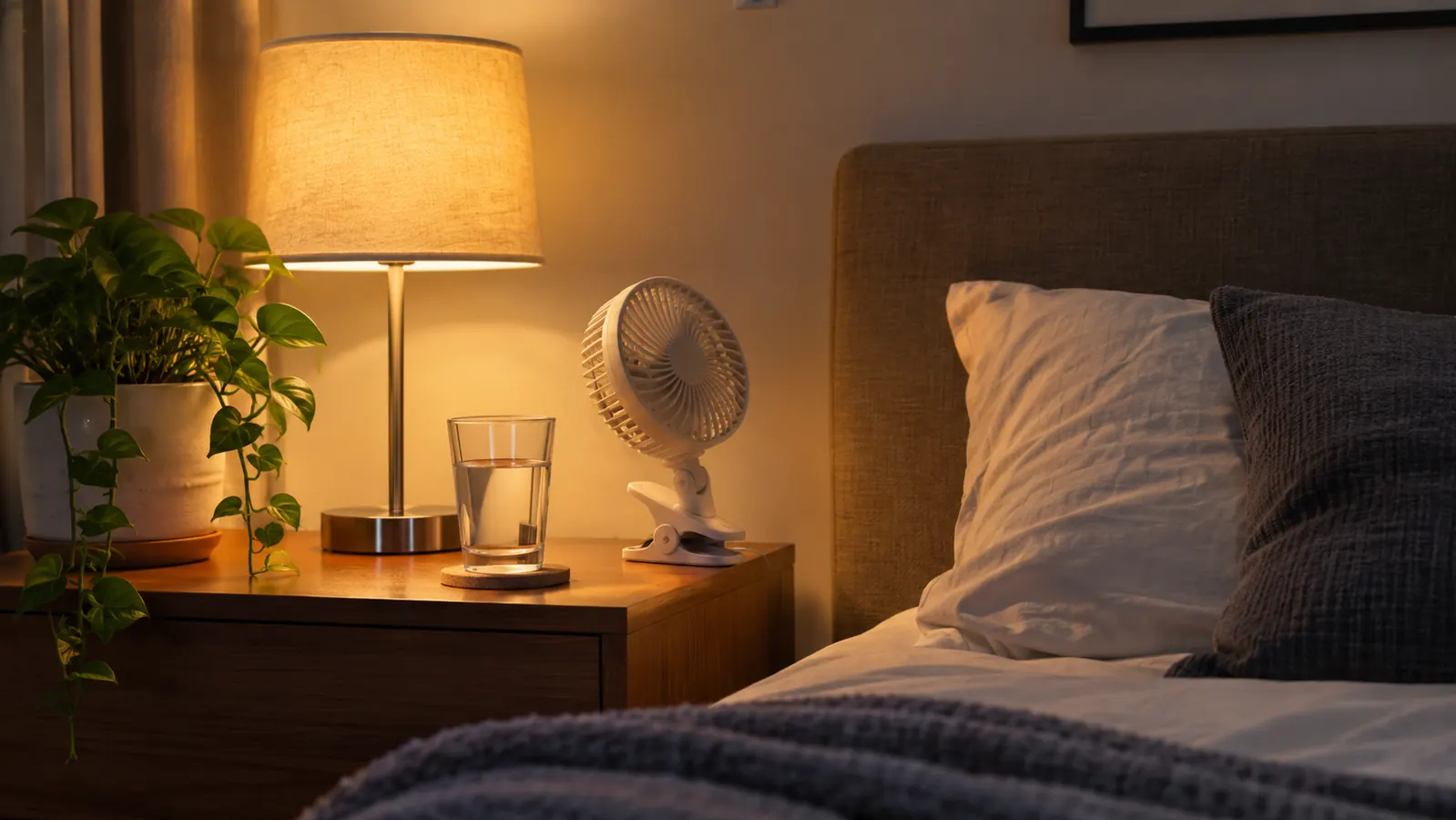
The rest is small and unglamorous. A fan pointed at the bed moves air across your skin, and for me it has done more than lowering the thermostat ever did, and it does not wake Dale. A cool shower before bed brings your skin temperature down going in. A glass of water on the nightstand means I am not walking to the kitchen at three in the morning, which used to be the thing that ended the night for good. Our bedroom faces west and collects the afternoon heat, so in summer I close the blinds by two in the afternoon and open the window the moment the sun is off that side of the house.
What pajamas cannot do is fix a medical problem. Night sweats that soak through your clothes and your sheets, that come with palpitations or a fever, or that started suddenly out of nowhere, are worth a conversation with your doctor. Mine knows about mine and I follow her advice on anything medical, hormones included. Sleepwear is a comfort tool. It is a good one, and it is not a treatment.
If you change one thing this month, change the layer closest to your skin
The Joyaria set is long sleeve with a button front and ankle-length pants, in bamboo viscose. Two thousand five hundred and sixteen women have reviewed it and it sits at 4.5 stars. Start with one set and give it three real nights.
Amazon Check Today's Price on Amazon →